
Contact Information
Get started swiftly & easily by contacting us
- Suite LP56628 20-22 Wenlock Road London N1 7GU
- eMail Info@XHAL.UK
Agentic AI does more than automate tasks. It shifts authority, expands risk, and changes who — or what — is really in control.
XHAL.ORG — People First AI
Led by Kuldeepuk Kohli, an experienced enterprise Data & Agentic AI Pre-Sales Solution Architect, XHAL.ORG brings together decades of customer-facing technology experience, evidence-led data analysis and emerging AI innovation.
We help organisations look beyond traditional IT outsourcing and technology upgrades towards intelligent, secure and accountable enterprise transformation.
Our independent research and illustrative assessments of HMRC, NHS Scotland and BBC Project Petra demonstrate how published financial and operational information can inform transformation opportunities, five-year business cases and responsible Agentic AI strategies.
Our approach: experienced people, trusted data, practical architecture and measurable long-term value — preparing organisations for 2027 and beyond.
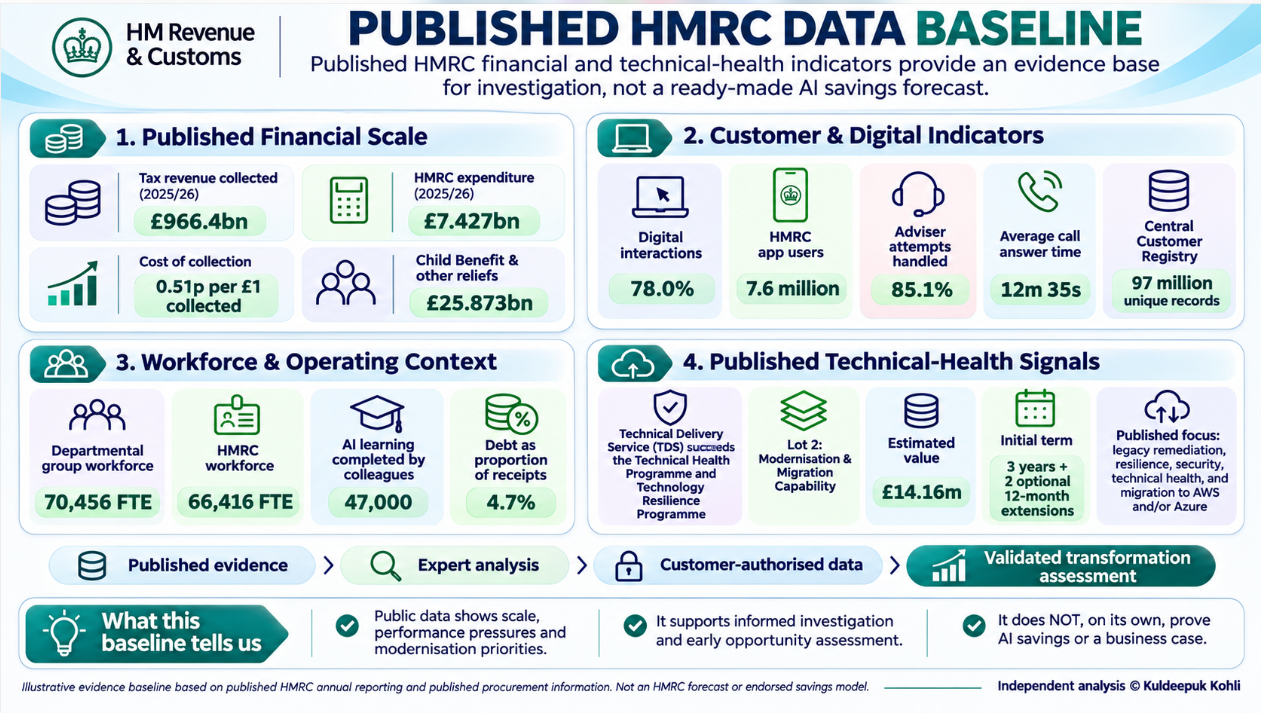
Why should UK taxpayers settle for yesterday’s outsourcing models when public services need to prepare for 2027 and beyond?
An independent, evidence-led assessment by Kuldeepuk Kohli, Founder & Director of XHAL.ORG, exploring HMRC’s published financial data, legacy modernisation, Data & Agentic AI opportunities and the importance of experienced technical specialists in government procurement.
Discover why trusted people, responsible AI and measurable long-term public value matter more than technology buzzwords or incumbency alone.
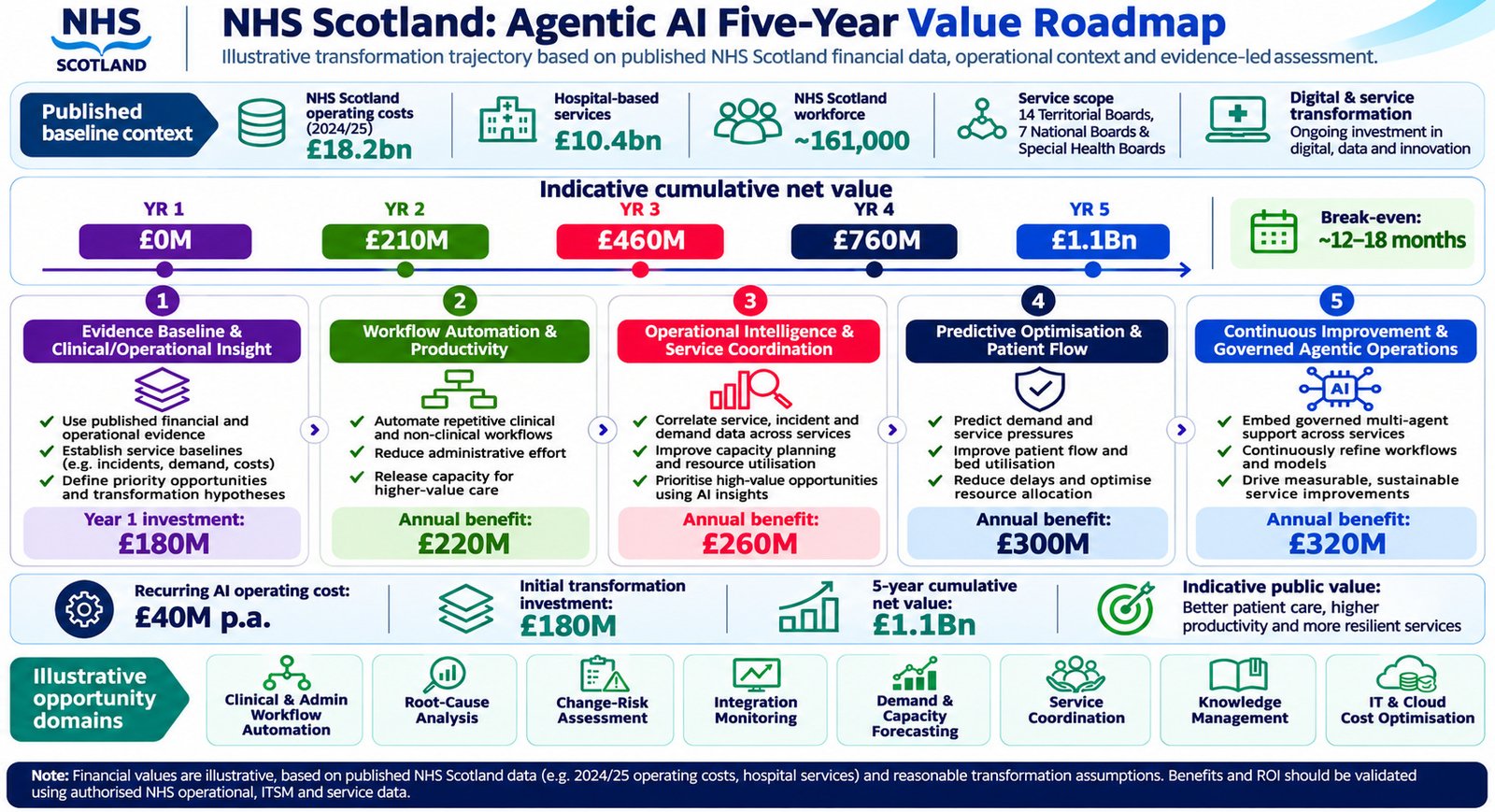
Should NHS outsourcing renewals focus only on reducing costs, or on delivering better services and long-term value for public money?
In his article, “From Cost-Led Outsourcing to AI-Led Transformation: Delivering Better Value for the NHS,” Kuldeepuk Kohli, Founder & Director of XHAL.ORG, explores why the next generation of NHS technology partnerships needs more than traditional outsourcing.
Drawing on over 30 years of enterprise technology experience, the article examines the importance of experienced Data & AI architects, evidence-led procurement, modern IT service management and responsible Agentic AI.
The accompanying NHS Scotland infographic illustrates how published information can support an initial five-year transformation assessment.
The central message: NHS organisations need trusted partners who can combine proven expertise, innovation, accountability and measurable public value.
The infographic is an independent illustrative scenario, not an NHS-approved financial forecast or evidence of realised savings.
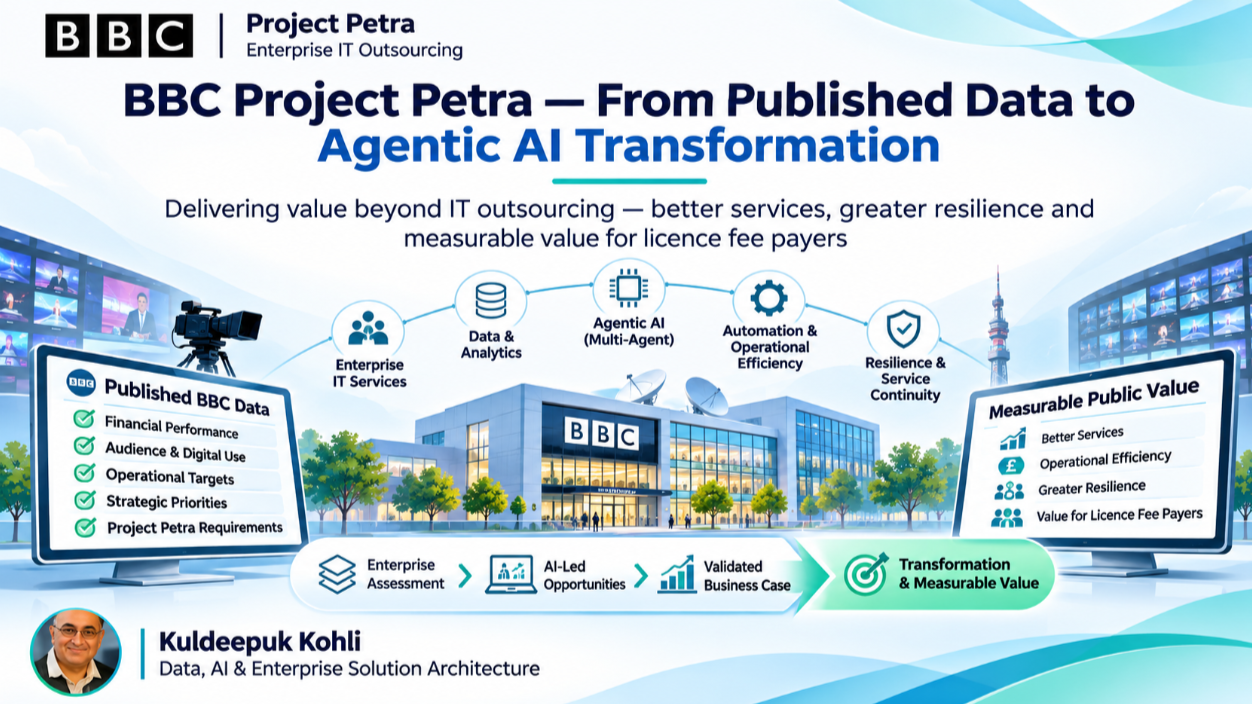
How could the BBC use Data & Agentic AI to modernise enterprise IT, improve service resilience and deliver better long-term value?
Project Petra is the publicly published name of a BBC enterprise IT and infrastructure procurement.
Using published BBC financial reports and Project Petra procurement information, Kuldeepuk Kohli, Founder & Director of XHAL.ORG, has developed an independent, experience-led assessment of potential technology transformation opportunities.
The analysis explores IT service management, infrastructure modernisation, intelligent workflow automation, specialist AI agents, service coordination and five-year business-value modelling.
Our focus: Experienced solution architecture, trusted data, responsible AI, measurable efficiencies and long-term transformation.
This is independent research, not a BBC-commissioned or approved project. Financial projections are illustrative and require validation against authorised operational, ITSM and cost data.
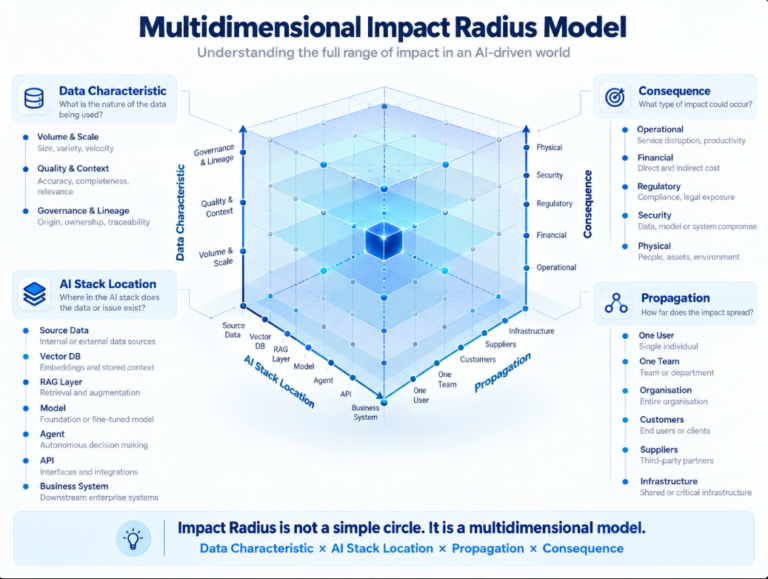
The Impact Radius looks at where those consequences travel — across people, organisations, power structures, accountability and human control.
As AI becomes more autonomous, the key question is no longer only what the system can do, but who is affected when it acts.
My work explores Agentic AI, AI governance, institutional risk and how we preserve meaningful human agency as these systems become more capable.I also share ongoing research, ideas and practical reflections through my LinkedIn newsletter. Follow my latest work on LinkedIn
Agentic AI could become the next major lever for improving efficiency and reducing the cost of managed service contracts — but not in the traditional way.The opportunity is not simply to automate more tasks or remove more people from the process.Agentic AI can change how services are designed, delivered and governed — coordinating work across systems, handling routine decisions, identifying issues earlier and allowing human expertise to focus where judgement really matters. The real challenge for MSPs and System Integrators is this:
How do you redesign the service model around AI agents while preserving accountability, resilience and human control?
That is where the next competitive advantage may emerge.You can also read my LinkedIn newsletter article, “Agentic AI: The New Challenge for System Integrators & Managed Service Providers”:

XHAL’s eCortex Research Hub is the public home of an open, continuously evolving white paper examining how modern AI systems are built, who controls them, and how their impacts are experienced by people, organisations, and communities.
It brings together technical reality, market structure, and human consequences to help educators, healthcare providers, policymakers, and enterprises understand not just what AI can do — but how it is governed, where risk sits, and who ultimately holds responsibility.
This research is published in stages as the work develops, with each section reflecting the best publicly available understanding of the AI ecosystem at the time of release.
This hub tracks the development of the eCortex White Paper. Each section is published when it is ready and remains available as part of a transparent, living research programme.
This is a long-term, open research programme examining the structure, governance, and human impact of artificial intelligence. It includes the full working document, background material, and a roadmap of future sections.
Section One establishes the baseline for all future research. It explains who owns foundational AI models, who controls cloud infrastructure, and how power and risk are distributed across the modern AI ecosystem.
It is the starting point for understanding why AI feels decentralised — but behaves as a tightly coupled system.
The eCortex White Paper is not theoretical. It informs the design of real AI systems used in education, healthcare, and public services. The platforms below are practical applications of the principles explored in our research — combining ethical design, human oversight, and AI-powered insight.
XHAL.UK is an ethical AI consultancy and product studio, founded on the belief that technology should serve people — not the other way around.We create Ethical AI Learning Training Tools for schools, healthcare, and SMEs. Our platforms help organisations boost productivity while protecting human skills.Our products — Rapid LMS, Teddy AI™, and EchoMinds™ — are designed with neurodiversity, equality, and wellbeing at their core. At XHAL.UK, we don’t just build AI. We build AI that empowers.


